
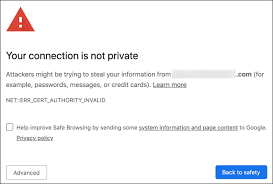
Seeing a “not secure” warning on a website can be puzzling, especially if you’re new to browsing the internet. It sounds serious, and sometimes it can be! This message pops up when your connection to a website isn’t private.
It’s like sending a postcard instead of a sealed letter; anyone could read it. Don’t worry, though. We’ll walk through why this happens and how to fix it, step by step, making it simple for everyone.
Get ready to learn how to keep your online visits safe and sound.
Key Takeaways
- Understand why “a user receives this error message not secure” happens.
- Learn about the importance of HTTPS for website security.
- Discover how to check your browser and website settings for security issues.
- Find out about common causes like expired certificates or mixed content.
- Get actionable steps to resolve the “not secure” warning.
Why You See The Not Secure Warning
When you visit a website, your browser tries to establish a secure connection. This connection uses encryption to protect your information, like passwords or credit card numbers, from being seen by others. If this secure connection isn’t set up correctly, your browser will show a “not secure” warning.
This alerts you that the site might not be safe to share sensitive data with.
This warning is designed to protect you. It means the website isn’t using a valid security certificate, or the encryption isn’t working right. It’s a signal to be cautious and not proceed with any actions that involve sharing personal details.
What Does “Not Secure” Mean Exactly
The “not secure” warning, often displayed as a padlock with a red line through it or simply the words “Not Secure” in the address bar, indicates a problem with a website’s security. Specifically, it means the website is not using HTTPS. HTTPS (Hypertext Transfer Protocol Secure) is a protocol that encrypts the connection between your browser and the website’s server.
Without HTTPS, any data you send to or receive from the website is transmitted in plain text. This makes it vulnerable to interception by hackers or anyone monitoring the network. Imagine sending a secret message on a postcard – anyone who handles it can read it.
With HTTPS, it’s like sending that message in a locked box, only the intended recipient has the key.
This warning is a standard feature in modern web browsers like Chrome, Firefox, and Edge. They are programmed to flag any website that doesn’t meet current security standards. The goal is to make users aware of potential risks before they might unknowingly expose their personal information.
The Role of SSL/TLS Certificates
SSL (Secure Sockets Layer) and its successor, TLS (Transport Layer Security), are cryptographic protocols that provide communication security over a computer network. When a website has an SSL/TLS certificate, it allows your browser to establish an encrypted connection with the website’s server. This certificate is issued by a trusted Certificate Authority (CA) and verifies the identity of the website owner.
When your browser connects to a website using HTTPS, it checks the website’s SSL/TLS certificate. It verifies that the certificate is valid, not expired, and issued by a trusted CA. If these checks pass, your browser displays a padlock icon, indicating a secure connection.
If any of these checks fail, or if the website is only using the older, unencrypted HTTP protocol, you will see the “not secure” warning.
These certificates are crucial for online trust. They assure visitors that the website they are interacting with is legitimate and that their data will be protected during transmission. Without them, online transactions and private communications would be highly insecure.
Common Reasons For The Error
There are several reasons why you might encounter the “not secure” warning. Some are simple to fix, while others might require changes from the website owner. Understanding these common culprits helps in troubleshooting and knowing whether the issue is on your end or theirs.
Outdated or Missing SSL/TLS Certificate
The most frequent cause for a “not secure” warning is that the website has an expired or no SSL/TLS certificate. Websites need to renew these certificates periodically, typically annually. If the renewal is missed, the certificate becomes invalid, and browsers will flag the site as insecure.
It’s like a driver’s license expiring – it’s no longer valid for legal operation.
Sometimes, a website might have never installed a certificate in the first place, especially newer or smaller sites. This means they are operating on the unencrypted HTTP protocol, making all traffic vulnerable. For e-commerce sites or those handling any personal data, this is a significant security lapse.
When a certificate is expired, browsers will show a warning message, and often, you won’t be able to proceed to the site without acknowledging the risk. This is a critical security measure to prevent users from unknowingly compromising their data.
Mixed Content Issues
Another common problem is “mixed content.” This happens when a website is loaded over HTTPS, but some of its resources, like images, scripts, or stylesheets, are loaded from an HTTP source. Browsers are designed to block or warn about these mixed content elements because they can undermine the security of the entire page.
For example, a webpage might be secure, but if it includes an image loaded from an insecure HTTP link, the browser sees this as a potential vulnerability. An attacker could potentially inject malicious code through that insecure resource, even though the main page is HTTPS. This is why browsers aim for complete security across all elements of a webpage.
Resolving mixed content issues usually involves updating all website resources to use HTTPS links. This can be a bit more technical for website administrators, as it often requires going through the website’s code and changing old HTTP links to their HTTPS counterparts.
Browser Cache and Cookies
Sometimes, the issue might be with your browser’s stored data, such as cache and cookies. Your browser saves information from websites to speed up loading times on subsequent visits. However, if this cached data becomes outdated or corrupted, it can sometimes lead to security warnings, even if the website itself is secure.
Clearing your browser’s cache and cookies can resolve these temporary glitches. It forces your browser to re-download fresh information from the website, ensuring you’re seeing the most current and accurate security status. This is a quick troubleshooting step that often solves the problem.
It’s a good practice to clear your cache and cookies periodically anyway, as it can also improve overall browsing performance and privacy.
Incorrect Date and Time Settings
Believe it or not, your computer’s date and time settings can impact your ability to establish a secure connection. SSL/TLS certificates have specific validity periods. If your computer’s clock is significantly ahead or behind, your browser might incorrectly determine that a valid certificate is expired or not yet active.
Websites rely on accurate time synchronization to validate their security certificates. If your system clock is off, your browser cannot properly verify the certificate’s expiration date. This can lead to various security errors, including the “not secure” warning.
Ensuring your device’s date and time are set correctly, ideally to synchronize automatically with an internet time server, is a simple yet effective way to prevent such issues.
How To Fix The Not Secure Error
When you encounter a “not secure” warning, there are several steps you can take. Some are actions you can perform as a user, while others require the website owner to make changes.
For Website Visitors
If you’re just visiting a website and see the warning, you have a few options to try:
- Reload the Page: Sometimes, the error is temporary. Try refreshing the page.
- Clear Browser Cache and Cookies: As mentioned, old data can cause issues. Clearing them might fix it.
- Check Your System Date and Time: Make sure your computer’s clock is accurate.
- Try a Different Browser or Incognito Mode: This helps determine if the issue is specific to your browser or its settings.
- Proceed with Caution (If Necessary): If it’s a site you trust and you absolutely need to access it, you might have an option to proceed. However, avoid entering sensitive information.
These steps are quick and can often resolve the problem if it’s related to your browser or local settings. They are the first line of defense for any user encountering this error.
For Website Owners
If you own the website and are seeing the “not secure” warning, here’s what you should do:
- Install or Renew Your SSL/TLS Certificate: If you don’t have a certificate, get one from a trusted provider. If yours has expired, renew it immediately. Many hosting providers offer free SSL certificates.
- Fix Mixed Content Issues: Go through your website’s code and update all HTTP links for images, scripts, and stylesheets to HTTPS. You can use online tools to scan your site for mixed content.
- Ensure Proper HTTPS Configuration: Make sure your web server is configured to serve all content over HTTPS and that any HTTP requests are redirected to HTTPS.
- Check for Mixed Active Content: This is more advanced and involves scripts that are loaded over HTTP. These need to be updated to HTTPS.
Addressing these points will ensure your website displays the secure padlock icon, building trust with your visitors and protecting their data. It’s a vital part of maintaining a professional and secure online presence.
Understanding Website Security Best Practices
Beyond just fixing the “not secure” error, it’s helpful to understand the broader landscape of website security. This knowledge empowers you to make better decisions online and to maintain a safe website.
The Importance of HTTPS
HTTPS is the backbone of secure communication on the web. It’s not just about preventing “not secure” warnings; it’s about protecting user privacy and data integrity. When data is transmitted over HTTPS, it’s encrypted, meaning it’s scrambled and unreadable to anyone who might intercept it.
This is crucial for protecting sensitive information like login credentials, credit card numbers, and personal messages.
Moreover, search engines like Google rank HTTPS-enabled websites higher in search results. This means that having a secure website is not only good for your users but also for your website’s visibility and discoverability. It’s a clear signal to both users and search engines that your site is trustworthy and up-to-date with modern security standards.
Implementing HTTPS is a fundamental step for any website, from personal blogs to large e-commerce platforms. It’s a sign of professionalism and a commitment to user safety.
Tools to Help Identify Security Issues
There are several online tools that can help you diagnose security issues on your website, especially regarding SSL/TLS certificates and mixed content. These tools provide detailed reports that can pinpoint specific problems.
- SSL Labs Server Test: This is a comprehensive tool that tests your server’s SSL/TLS configuration and provides a detailed report. It checks for certificate validity, protocol support, and known vulnerabilities.
- Why No Padlock?: This tool specifically checks web pages for mixed content issues. It scans all the resources on a page (images, scripts, CSS) and reports any that are being loaded over HTTP.
- Browser Developer Tools: Most modern browsers have built-in developer tools (often accessed by pressing F12). The “Console” tab in these tools will often display specific errors related to mixed content or certificate issues.
Using these tools can save you a lot of time and effort in diagnosing and fixing security problems. They provide clear, actionable feedback that can guide you through the remediation process.
Common Myths Debunked
Myth 1: The “Not Secure” warning only appears for malicious websites.
Reality: While malicious websites often lack proper security, the “not secure” warning can appear for many legitimate websites due to technical reasons. This includes expired SSL certificates, mixed content issues, or misconfigurations. Many small businesses or personal blogs might unintentionally display this warning because they haven’t updated their security measures.
It’s a signal to check security, not an automatic condemnation of the site’s intent.
Myth 2: HTTPS is only necessary for websites that handle payments or personal data.
Reality: While HTTPS is absolutely critical for sites handling sensitive transactions, its importance extends to all websites. It encrypts all data exchanged, protecting against various forms of snooping and manipulation. Search engines also favor HTTPS sites.
Furthermore, even on sites without direct data entry, users may be logged in, or browser extensions could be active, making the connection vulnerable without HTTPS.
Myth 3: My website is secure because I have an antivirus program.
Reality: Antivirus software protects your device from malware but does not secure the connection between your browser and a website. Website security, particularly the use of HTTPS and a valid SSL/TLS certificate, is about the communication channel. An antivirus program can’t fix an insecure website connection; it can only protect your computer from threats it encounters locally or during downloads.
Frequently Asked Questions
Question: What should I do if a trusted website shows the “not secure” error?
Answer: If a website you know and trust shows a “not secure” warning, first try clearing your browser’s cache and cookies, and check your system’s date and time. If the problem persists, consider contacting the website administrator to inform them about the security issue. They may not be aware of it.
Question: Can I still use a “not secure” website?
Answer: You can technically still access and use a “not secure” website, but it is strongly advised against if you plan to enter any personal information like passwords, credit card numbers, or personal details. The connection is not encrypted, making your data vulnerable to interception.
Question: How long does an SSL/TLS certificate typically last?
Answer: SSL/TLS certificates are usually valid for one year. They need to be renewed annually to maintain their security status and prevent websites from displaying the “not secure” warning.
Question: Is it expensive to get an SSL certificate for my website?
Answer: Not necessarily. Many web hosting providers offer free SSL certificates as part of their hosting packages. If you need a more advanced certificate, paid options are available, but for most basic needs, free certificates are sufficient.
Question: Will the “not secure” warning affect my website’s search engine ranking?
Answer: Yes, Google and other search engines use HTTPS as a ranking signal. Websites that do not use HTTPS may rank lower than secure websites. Displaying the “not secure” warning can also deter visitors, indirectly affecting engagement metrics that search engines consider.
Wrap Up
Seeing a “not secure” warning means your browser couldn’t confirm a safe connection to the website. This is usually due to an invalid or missing security certificate or issues with how the site loads content. By checking your browser, system time, or by fixing website certificate and content issues, you can ensure safer browsing and protect your information.