
Looking for a taser review can feel a bit tricky, especially if you’re new to this. There’s a lot of information out there, and it’s hard to know where to start. Don’t worry, we’ll make it easy.
We’ll walk through everything step-by-step so you can feel confident in your choices. Stick around to learn what you really need to know before you pick one.
Key Takeaways
- Understanding the different types of taser devices.
- Learning about key safety features to look for.
- Knowing how to properly use and maintain your taser.
- Considering legal aspects and personal responsibility.
- Evaluating the effectiveness of various models.
Choosing Your Taser Device
When you’re looking into a taser review, the first thing to figure out is what kind of device fits your needs. There are a few main types, and each has its own way of working and what it’s best for. Understanding these differences helps you pick the right tool for safety.
It’s not about just buying the first thing you see; it’s about smart choices for peace of mind.
Personal Protection Tasers
These are often called stun guns or stun batons. They work by delivering an electric shock directly on contact. The idea is to incapacitate an attacker for a short time, giving you a chance to get away.
They usually have two prongs that touch the person. When you press the trigger, electricity flows between them.
The voltage can be very high, but the amperage is kept low to be non-lethal. This is important because high amperage can be dangerous. Think of it like a big splash of water versus a tiny, powerful stream.
The big splash might seem impressive, but the tiny stream can do more damage. With tasers, the high voltage is meant to jump the gap between the prongs and disrupt the attacker’s muscles.
Safety Features to Consider
- Safety Switch: This prevents accidental firing. It’s a physical switch you have to move to turn the device on. Without it, you might scare yourself or someone else without meaning to.
- Wrist Strap: Some have a strap that attaches to your wrist. If someone tries to grab your taser, the strap can keep it from being taken. It also helps ensure you don’t drop it.
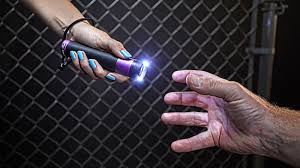
- Built-in Flashlight: Many models include a bright LED light. This can be useful for seeing in the dark, identifying threats, or just finding your keys. It’s a handy extra feature.
Real-Life Example
Sarah lived alone and wanted a bit more confidence walking at night. She researched different personal protection tasers and found one with a bright flashlight and a safety switch. During a late walk, she heard footsteps behind her.
She quickly turned on her taser’s flashlight, which startled the person following her. They turned away, and she felt safer knowing she had a way to protect herself.
Conducted Electrical Weapons CEWs
These are the types you might see police officers carrying. They are often called “Tasers” with a capital T, as this is a brand name that has become common for these devices. CEWs shoot out two small probes that attach to a person’s clothing or skin.
Wires connect these probes to the device.
When the probes hit their target, the CEW sends an electrical current through the wires. This current is designed to cause neuromuscular incapacitation. This means it makes the muscles contract uncontrollably, making it very hard for the person to move or stand.
It’s meant to stop a threat from a distance.
How They Work
The device fires a small cartridge containing compressed nitrogen. This cartridge propels the probes. The probes are barbed, helping them to stick.
Once connected, the device sends a high-voltage, low-amperage electrical charge. This charge interrupts the body’s natural electrical signals. It’s like a temporary glitch in the nervous system.
The range for CEWs can vary, but typically they can be effective from 15 to 35 feet. This distance is a major advantage. It allows the user to create space between themselves and a potential attacker.
This distance can be a crucial factor in self-defense situations.
CEW Cartridge Types
- Standard Cartridges: These are the most common and are designed for typical self-defense scenarios. They are effective at standard ranges.
- Extended Range Cartridges: Some CEWs offer cartridges that can shoot probes further, often up to 50 feet. This is useful in open areas where more distance is needed.
- Training Cartridges: These use inert or simulated probes and no electrical charge. They are vital for practicing safe deployment without causing harm.
Case Study
A local convenience store owner was concerned about rising crime. After consulting with law enforcement and a security expert, he decided to carry a CEW. One evening, a person entered the store and became aggressive.
The owner calmly deployed his CEW from a safe distance. The probes hit the individual, and they were temporarily incapacitated, allowing the owner to call the police and avoid a physical confrontation.
Pepper Spray Guns
These devices combine the features of a taser and pepper spray. They look similar to a firearm but shoot a stream or fog of OC (oleoresin capsicum) spray. Some models also include a mild electrical charge that can be used on contact, similar to a stun gun.
The advantage here is versatility. You can use the spray from a distance, and if the attacker gets too close, you can use the contact stun feature. This gives you options depending on how the situation unfolds.
It’s like having two tools in one.
Key Components
- OC Canister: This holds the pepper spray. The concentration of OC can vary, affecting its strength. Higher concentrations are more potent.
- Propellant: This is what forces the spray out of the canister. It’s usually nitrogen or CO2.
- Trigger Mechanism: This fires the spray. Some have a safety lock similar to a firearm.
- Electrical Contacts: If it’s a dual-purpose device, these are the parts that deliver the stun.
Spray Patterns
- Stream: This is a concentrated stream of OC spray. It’s less affected by wind and can be aimed more precisely at an attacker’s face. It also helps to avoid cross-contamination.
- Cone/Fog: This creates a cloud of spray that covers a wider area. It’s easier to hit a target, but it can also be more easily blown back onto the user by wind.
Scenario Example
Mark was walking his dog in a park known for occasional issues with aggressive individuals. He carried a pepper spray gun with a stun feature. One afternoon, a man approached him aggressively, yelling.
Mark maintained a safe distance and deployed the spray. The man recoiled, and Mark used the opportunity to quickly retreat and call for help. He felt prepared for the situation.
Effectiveness and Limitations
When reading a taser review, it’s vital to understand what these devices can and cannot do. No self-defense tool is perfect. Knowing the limits helps you use it wisely and not rely on it more than you should.
Tasers, both CEWs and contact stun guns, are designed to stop an attacker by temporarily disrupting their motor control. This can provide a critical window for escape. However, their effectiveness can depend on several factors.
These include the attacker’s physical condition, their state of mind, and how well the probes or contacts connect.
Factors Affecting Effectiveness
- Probe Spread (CEWs): For CEWs, the probes need to spread apart to create a proper electrical circuit across the body. If they land too close together, the electrical charge might not incapacitate the attacker effectively.
- Clothing Thickness: Heavy or thick clothing can sometimes prevent the probes from making good contact or conducting the electrical current properly.
- Targeting Precision: For contact stun devices, you need to be very close to the attacker. This requires a high degree of physical confrontation, which can be risky.
- Attacker’s Tolerance: While rare, some individuals may have a higher pain tolerance or be under the influence of substances that lessen the immediate impact of the electrical discharge.
Statistical Insights
Studies on CEW use by law enforcement have shown high rates of incapacitation when probes make good contact. For example, one review of police data indicated that CEWs successfully incapacitated their targets in over 75% of deployments. However, these statistics often involve trained officers and controlled situations.
On the other hand, contact stun devices require direct physical contact. This means the user is much closer to the threat, increasing the risk of injury or having the device taken. Their effectiveness is highly dependent on the user’s ability to get close enough and apply the device without being overpowered.
Limitations to Understand
- “Drive Stun” Mode: Many contact tasers have a “drive stun” mode. This is when you press the device directly against someone. It can cause pain, but it might not always incapacitate them like probes can. It’s more of a pain compliance tool in this mode.
- Battery Life: Like any electronic device, tasers need power. You must ensure the battery is charged and ready. A dead battery makes the device useless.
- Range for Contact Tasers: The biggest limitation for contact tasers is the need for close proximity. This is a significant risk in a self-defense scenario.
- Environmental Factors: Rain, extreme cold, or humidity can sometimes affect the performance of electronic devices, including tasers.
Real-World Application Scenario
- A woman is walking to her car in a dimly lit parking garage.
- She notices someone loitering nearby and feels uneasy.
- She discreetly pulls out her CEW.
- As the person approaches her rapidly, she maintains distance and aims.
- She fires the CEW, and the probes attach to the person’s jacket.
- The electrical discharge causes temporary incapacitation, allowing her to safely enter her car and call for help.
Legal and Ethical Considerations
Before you even think about purchasing a taser, it’s super important to know the rules. Laws about owning and carrying these devices are different everywhere. What’s okay in one town might be a problem in another.
Getting this information first can save you a lot of trouble.
The main thing is to be responsible. Tasers are tools for self-defense, not weapons for aggression. Using them inappropriately can lead to serious legal consequences.
This includes fines, jail time, and a criminal record. It’s about protecting yourself, not about starting fights.
Understanding Local Laws
Laws vary by state, county, and even city. Some places allow the ownership and carrying of stun guns and CEWs without a permit. Other places require a permit, registration, or have outright bans.
For instance, in some states, possession of a stun gun is legal for adults 18 and older. In other states, it might be restricted to those 21 and older, or prohibited altogether. Some states may also have rules about where you can carry them, like not in schools or government buildings.
Legal Status Comparison
| State | Stun Gun Possession | CEW (Taser) Possession |
|---|---|---|
| California | Generally Illegal | Legal with permit |
| Texas | Legal | Legal |
| New York | Illegal without license | Legal with license |
| Florida | Legal | Legal |
Note: Laws change frequently. Always check current local statutes.
Ethical Use of Tasers
- Self-Defense Only: Tasers should only be used when there is an immediate threat of harm to yourself or others. They are a last resort.
- De-escalation First: Always try to de-escalate a situation verbally if possible. Running away is often the best option if it’s safe to do so.
- Proportional Response: The force used should be proportional to the threat. Using a taser against someone who is not posing a serious danger can be considered excessive force.
- Awareness of Surroundings: Be aware of where you are and who else might be affected. Using a CEW in a crowded area could cause unintended harm to bystanders.
Responsible Ownership Training
Many manufacturers and self-defense organizations offer training courses. These courses teach you not only how to operate the device but also about the legal and ethical responsibilities that come with carrying one.
Sample Scenario for Responsible Use
- You are walking home late and someone follows you, making threats.
- You turn and face them, telling them to leave you alone.
- They advance, and you draw your taser, warning them you will use it if they come closer.
- If they continue to advance and pose an immediate threat, you deploy the taser to create an opportunity to escape.
- Once safe, you contact law enforcement to report the incident.
Maintenance and Care
Just like any tool, your taser needs proper care to work right when you need it. A good taser review should always mention this. Keeping it in good shape means it will last longer and be reliable.
It’s not complicated, but it does require a little bit of attention.
The most common issue is with the power source. Whether it’s a rechargeable battery or disposable ones, they need to be checked. A taser with a dead battery is just a heavy piece of plastic.
Also, keeping the device clean helps prevent it from malfunctioning.
Battery Life and Charging
Most modern tasers use rechargeable lithium-ion batteries. These are convenient because you can plug them into a wall socket or USB port. It’s a good idea to get into the habit of charging your taser regularly.
Some suggest charging it every month or so, even if you haven’t used it. This keeps the battery healthy. Others recommend charging it after every use.
Always follow the manufacturer’s instructions for charging to avoid damaging the battery or the device.
Cleaning Your Taser
- Exterior Cleaning: Use a soft, dry cloth to wipe down the outside of the taser. If there’s dirt or grime, you can use a slightly damp cloth, but make sure no water gets into any openings.
- Contact Points/Prongs: For contact stun devices, gently clean the metal prongs with a soft brush or cloth. This ensures good electrical contact. For CEWs, ensure the probe tips are clear of debris after firing, if possible.
- Avoid Harsh Chemicals: Do not use window cleaner, solvents, or abrasive cleaners. These can damage the plastic casing or internal components.
Storage Best Practices
Store your taser in a safe, dry place. It should be out of reach of children and unauthorized individuals. Many tasers come with a carrying case or holster, which is ideal for protection and easy access.
Avoid extreme temperatures, both hot and cold. Leaving a taser in a hot car for extended periods can damage the battery and electronics. Similarly, freezing temperatures can also cause issues.
Maintenance Schedule Example
- Weekly: Check the indicator lights for battery status. Wipe down the exterior with a dry cloth.
- Monthly: Charge the device fully if it’s rechargeable. Test the flashlight (if applicable) to ensure it works.
- Quarterly: Inspect the device for any visible damage. Clean contact points or prongs carefully.
- Annually: Consider a more thorough cleaning. If you live in an area with strict laws, ensure your device is still compliant.
Common Myths Debunked
Myth 1: Tasers are deadly weapons.
Reality: While tasers can cause injury, they are generally considered non-lethal force options. Their primary function is to temporarily incapacitate a person, allowing for escape, rather than to cause permanent harm or death. Lethal force is only a risk in very rare circumstances, often due to pre-existing medical conditions, falls after being tased, or improper use.
Reputable taser reviews focus on their incapacitating, not killing, capability.
Myth 2: Anyone can buy and use a taser without training.
Reality: While many stun guns are available over-the-counter, responsible ownership and use require education. Laws vary greatly, and improper use can lead to severe legal trouble. Furthermore, effective and safe deployment, especially for CEWs, is best learned through certified training courses.
Understanding the device’s limitations is crucial.
Myth 3: A taser will always stop an attacker immediately.
Reality: The effectiveness of a taser can depend on factors like clothing, probe spread for CEWs, and the attacker’s physical state. While often effective, there’s no guarantee of immediate incapacitation in every situation. Some individuals might resist the effects for a short period, especially if not hit properly or if under the influence of certain substances.
Myth 4: Tasers are the same as stun guns.
Reality: While often used interchangeably, there’s a distinction. “Taser” is a brand name for Conducted Electrical Weapons (CEWs) that shoot probes from a distance. Stun guns are typically contact-based devices that require direct physical contact to deliver an electrical shock.
Both use electricity but operate differently.
Frequently Asked Questions
Question: Can I carry a taser for self-defense everywhere?
Answer: No, you cannot carry a taser everywhere. Laws regarding their possession and carry vary significantly by state and local jurisdiction. You must research and understand the specific laws in your area before carrying one.
Question: How long does the incapacitation from a taser last?
Answer: The incapacitation effect from a taser is typically temporary, lasting from a few seconds to a few minutes. This brief window is intended to give you time to escape the situation.
Question: Are taser reviews reliable?
Answer: Reputable taser reviews from trusted sources, often focusing on safety, effectiveness, and legal compliance, can be very helpful. However, always cross-reference information and prioritize official documentation and legal advice.
Question: What is the difference between a stun gun and a Taser brand device?
Answer: A stun gun requires direct physical contact to deliver an electrical shock. A Taser brand device (CEW) shoots two probes connected by wires, allowing for use at a distance.
Question: Do tasers leave marks?
Answer: CEWs may leave small puncture marks where the probes entered the skin or clothing. Contact stun guns can sometimes cause redness or minor burns at the point of contact, but these are usually temporary.
Conclusion
Exploring a taser review is smart. You’ve learned about different types like CEWs and stun guns. We covered their pros, cons, and how they work.
Remember to always check your local laws before buying or carrying one. Responsible use and proper maintenance are key to keeping yourself safe and your device ready.